
How to protect our drinking water at the source
From watershed restoration to simple changes at home, protecting water relies on collective action.
Chester, Ridley and Crum Creeks are over 95% impaired, meaning they fail to meet at least one state water quality standard, according to the CRC Watersheds Association. In the entire state of Pennsylvania, the average is about 37% due to agricultural runoff, stormwater runoff and pollutants that contribute to the problem.
Protecting waterways can start with surprisingly simple solutions. For example, restoring landscapes can help filter pollutants before they reach local streams and rivers.
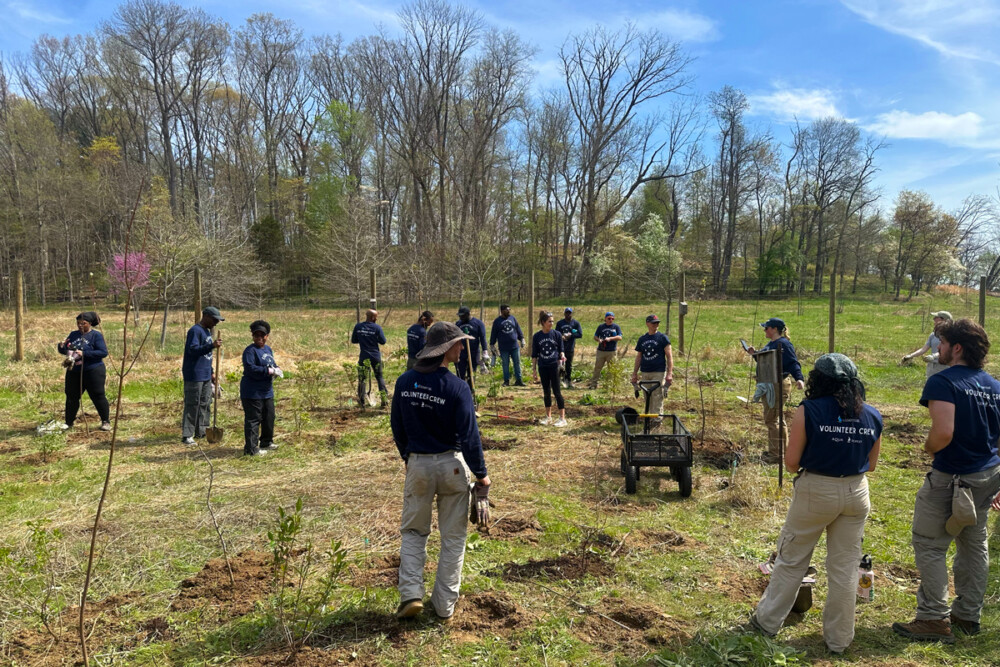
It was barely 10 am in mid-April, but the sun was already beating down during a record-breaking heat at Natural Lands’ Hildacy Preserve in Media, Pennsylvania. Laughter and chatter filled the air as volunteers from Aqua Pennsylvania hoisted small trees out of a truck bed and placed them in pre-made holes dug into the dirt. The goal of planting these trees is to protect the approximately 24-mile-long Crum Creek, a tributary to the Delaware River and a vital source of drinking water for Delaware County residents.
The trees absorb stormwater from the floodplain, which is becoming more important as heavier rainfall events become more common with climate change. Plus, floodwater can potentially carry bacteria and pollutants (like fertilizer, road salt, sewage, plastic, and more), risking contamination and inundating water infrastructure.
“What we’re doing today is going to help absorb storm water and filter out any contamination,” said Krista Seng, Community Affairs Lead and a source water protection expert at Aqua, an Essential Utilities Company, who organized the employee service event upstream of their oldest drinking water treatment plant.
Floodwater isn’t the only threat to our drinking water here in Pennsylvania: there’s aging pipes, forever chemicals (known as PFAS), road salt, and more. Though every drop in your faucet undergoes a rigorous treatment and testing process, there are ways that both customers and utility companies can pitch in to fight back.
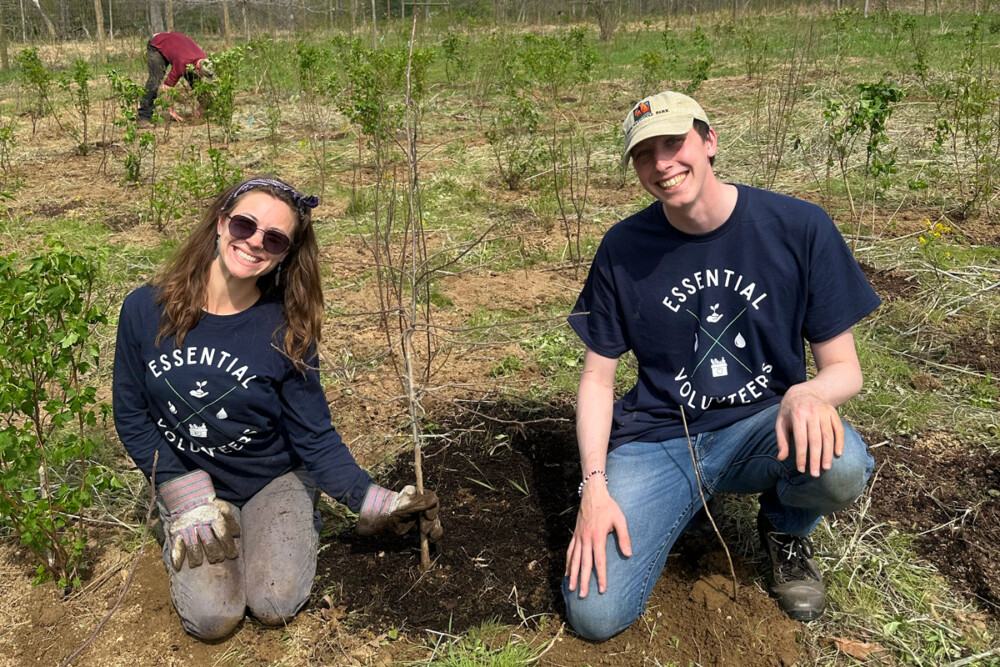
Aqua employees planted about 300 trees that morning, which will help soak up and slow down the water as it travels downhill to the creek, allowing time for it to soak into the ground rather than overwhelm the stream channel. The trees will also help stabilize the stream bank, which helps prevent erosion and muddier water. Since 2022, Essential Utilities employees have contributed over 7,900 volunteer hours through tree planting events like these, as well as litter cleanups and other activities to protect natural resources.
“Our mission is protecting and providing drinking water,” said Dr. Chris Crockett, Vice President, Chief Environmental, Safety, & Sustainability Officer at Essential Utilities. Protecting water is a 24/7 job, from responding to spills and other emergencies, building back-up systems and working to improve the sources of our drinking water. As good as our water treatment technologies are, it is always better for the contamination to not be there in the first place.
Aqua also supports watershed protection through community partnerships. Its environmental and operations staff sit on various committees and help lead coalitions that help to protect water resources. Its parent company, Essential Utilities, supports local organizations through its nonprofit arm, the Essential Foundation. In April 2026, the Essential Foundation awarded $60,000 through its Protect Your Drinking Water grant program with the Pennsylvania Environmental Council to support watershed restoration projects, research and education across southeastern PA.
The Stroud Water Research Center received a total of $15,000 for two grants, including one to train citizen scientists to evaluate how much road salt ends up in our groundwater and waterways, then use that data to inform the public. Once in our system, road salt is extremely difficult to get rid of, affecting our drinking water and infrastructure. Following the harsh winter southeastern PA just endured, community members understand the danger salt presents, and what alternatives there are to using it.
The Pennsylvania Resources Council was awarded $7,500 for their Compost, Not Chemicals program that teaches residents about more environmentally friendly ways to take care of their yards. Fertilizer is a pollutant that ends up in our water when it rains, while compost helps soil health.
“The creeks of southeastern PA are truly unique. The Chester, Ridley and Crum Creeks weave through 40 municipalities. They go through so many different landowners,” said Carly Lare, the executive director of the Chester Ridley Crum Watersheds Association, at the grant awards ceremony on April 21, 2026.
Because each watershed faces unique challenges, grants allow local organizations to identify issues and develop tailored solutions. “There needs to be holistic solutions for each of our different watersheds. You can’t apply the same solution to every watershed in Pennsylvania; it’s just not possible,” Lare said. “All of the grantees are able to come forward and say, ‘These are the problems we’re seeing with our different landowners,’ and use our knowledge on the ground to apply it to projects.”
What you can do to protect drinking water
There are simple steps residents can take at home that will help improve local waterways.
Things we can all do include limiting our pollution by cleaning up storm drains and our streets, leaving no trace by staying on trails to avoid erosion, picking up after our pets, and adding foliage and native plants to our communities.
If you live near a stream, river, or other waterway, keeping or restoring natural vegetation along the shoreline is one of the best ways to protect water quality. These “riparian buffers” help filter pollution, reduce erosion, and provide habitat for wildlife.
One way to rethink your yard is to have less lawn and more natural vegetation, according to Tom Gilbert, the president of the Pennsylvania Environmental Council (PEC).
“(Natural vegetation) can help water to infiltrate and will require less chemicals,” said Gilbert. “The chemicals or substances that you’re using in your yard or on your lawn will run off into the local waterway,” said Gilbert. Even letting lawn areas grow longer before mowing can help slow and absorb water.
Being mindful of what goes down the storm drain is important. It’s why you may have seen those “Only rain down the drain” medallions along the street. Washing your car at home can lead to pollution and soapy water running into a storm drain and, ultimately, to a waterway.
Adding a rain barrel can catch runoff from your downspout, which you can then use to water your garden. The more water we can get to infiltrate into the ground or be used by plants, the better our waterways will be for it.
For people without a yard, putting planters outside still helps. Gilbert recommended native plants or those good for pollinators – anything that captures rainfall in soil rather than letting it run off.
And then there’s always trees. You can apply for a free tree through the Pennsylvania Horticultural Society for your yard or street, or become a tree tender and learn planting and care techniques. PHS also has a watershed program in partnership with Aqua that is specifically for planting trees along streams, stormwater basins, and other sensitive areas.
And it doesn’t have to be 300 in a day. One tree matters and any tree is a “good” tree, according to Maggie Reilly, environmental specialist at Aqua.
“A native tree preferably, which will hold more water, survive better and provide more nutrients and habitat for our wildlife, which also benefits our water quality,” said Reilly.
Clean drinking water starts long before it reaches the tap. Whether it’s planting native species, reducing runoff, or caring for the streams in your community, small actions can help protect the waterways we all depend on.
This is the final installment in a three-part series about our drinking water, presented by Aqua, an Essential Utilities company. Catch up on more about where your water comes from, how it’s protected, what it goes through before it reaches your tap, and what actions you can take at home.
Become a Supporter!


