
From ‘Go Birds’ to LEED Platinum: Inside the Eagles’ sustainability playbook
A behind-the-scenes look at the Linc’s solar power, recycling systems, and surprising sustainability wins
“Go Birds!” is a unifying phrase. Through epic victories and heartbreaking defeats, being an Eagles fan is a way of life. If you’ve ever attended a game at Lincoln Financial Field, the game day experience is powered by more than crowd noise and pride. It’s also powered by 100% renewable energy.
Over 10,000 solar panels generate about 40% of the stadium’s annual energy (approximately four megawatts (4,000 kW), and renewable energy credits (RECs) are purchased to offset the rest.
The stadium achieved LEED Platinum certification in June 2024, the highest rating from the U.S. Green Building Council. It is the only LEED Platinum World Cup venue and one of just two existing NFL stadiums to achieve this status.
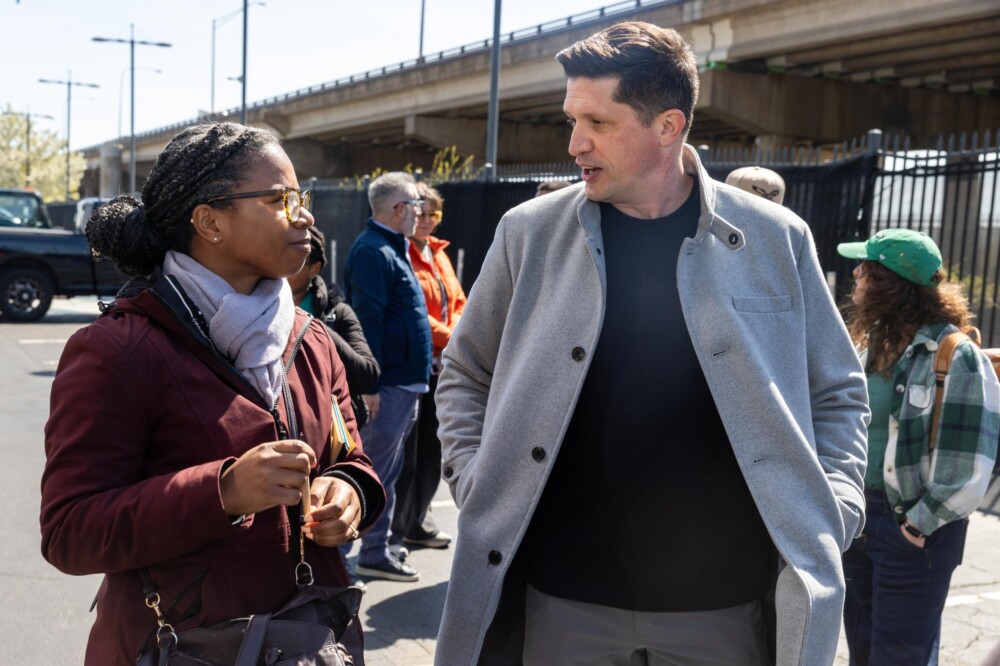
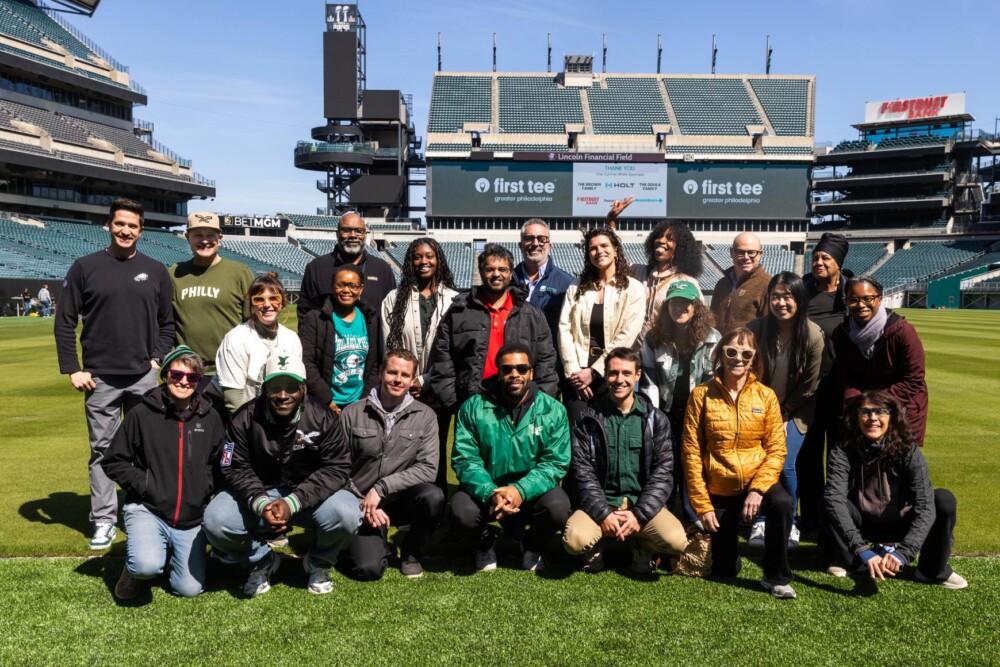
Green Philly members got an inside look during an exclusive tour of the Linc with Norman Vossschulte, the Eagles’ VP of Fan Experience and Sustainability, on April 9th, exploring how the Eagles’ “Go Green” program is turning one of the city’s largest venues into a model for environmental responsibility.
Powering game day with green operations
As fans enter the stadium, there are examples of sustainability. The main lobby hosts two oversized Lombardi trophies crafted from recycled stadium materials. The interior Linc walls include “Go Green” facts, such as how the organization has reduced electricity consumption by 66% by switching stadium lights to LEDs.
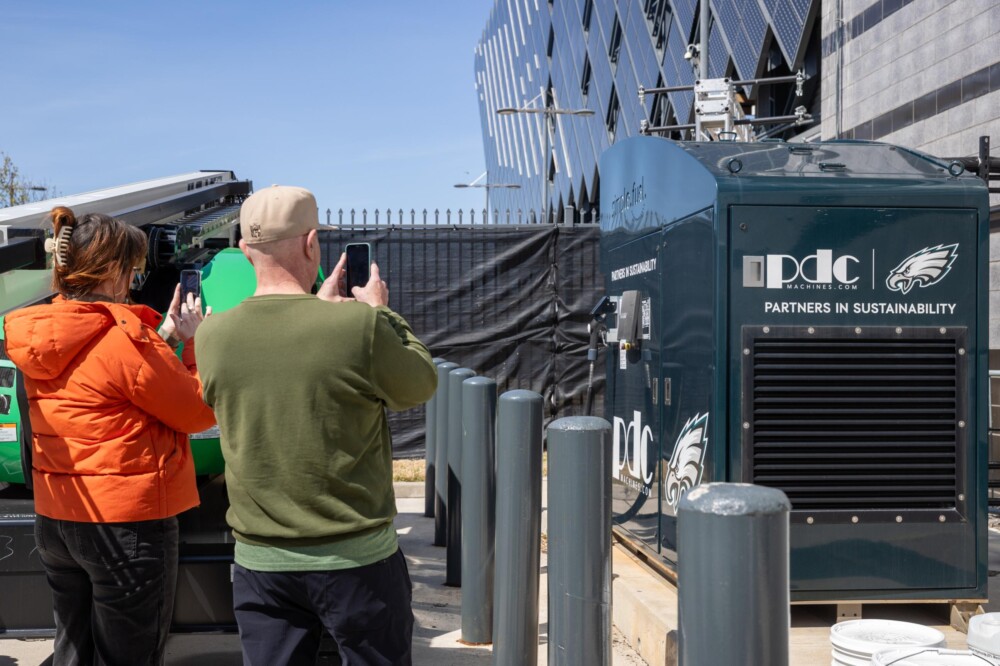
Outside the stadium sits a hydrogen refueling station to eventually power passenger vehicles while the team waits for the technology to catch up.
Playbook for Waste
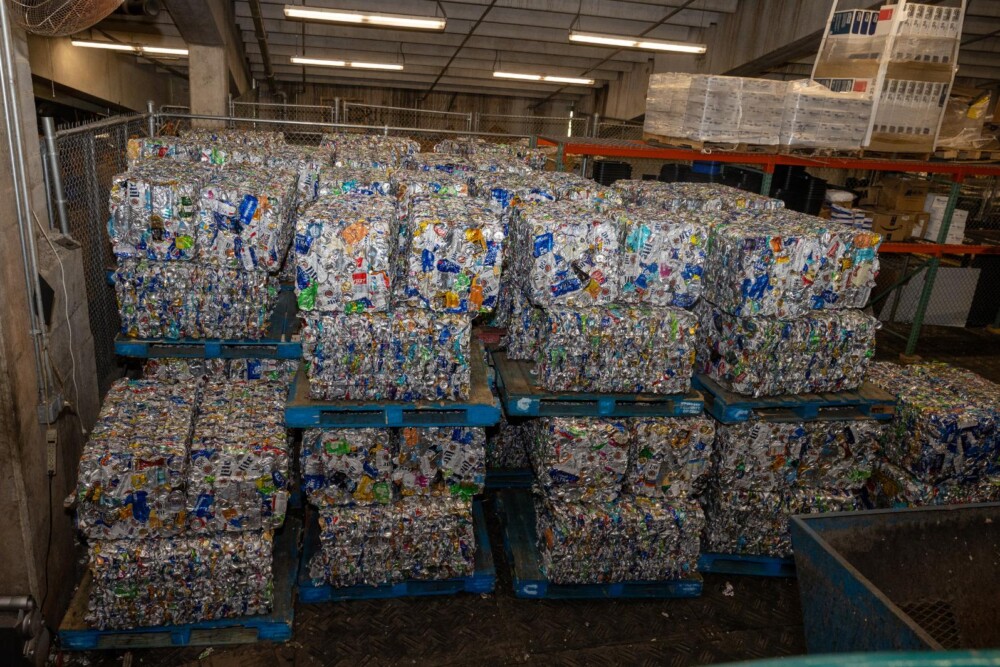
The Linc also has its own aluminum baler where workers use crush over 18 tons of cans each year. Instead of outsourcing the recycling, the team assessed that it would be more cost-effective and better for the environment to complete the task in-house, then sell to a recycler when prices are strong, or the storage space runs low. The baler costs approximately $15,000, and aluminum can be sold for around $1200/ton.
The stadium’s seating gets a second life, too. Of the roughly 70,000 chairs that circle the field, a few thousand can break during the season. During the offseason, instead of sending them to a landfill, a corporate recycling partner, Braskem to melt down the chairs into materials used to build park benches and playgrounds. They also do the same with plastic bottle caps, repurposing them as filler for construction.
Pre-consumer food waste is sent to a partner composting farm, Two Particular Acres.
Combined, these partnerships help to divert more than 1,000 tons of aluminum, glass, plastic and organic waste.
Turning sustainability into a fan story
Fans often are more proud of the Eagles after learning about their sustainability work, so the team uses humor and playful signage to talk about its sustainability efforts.
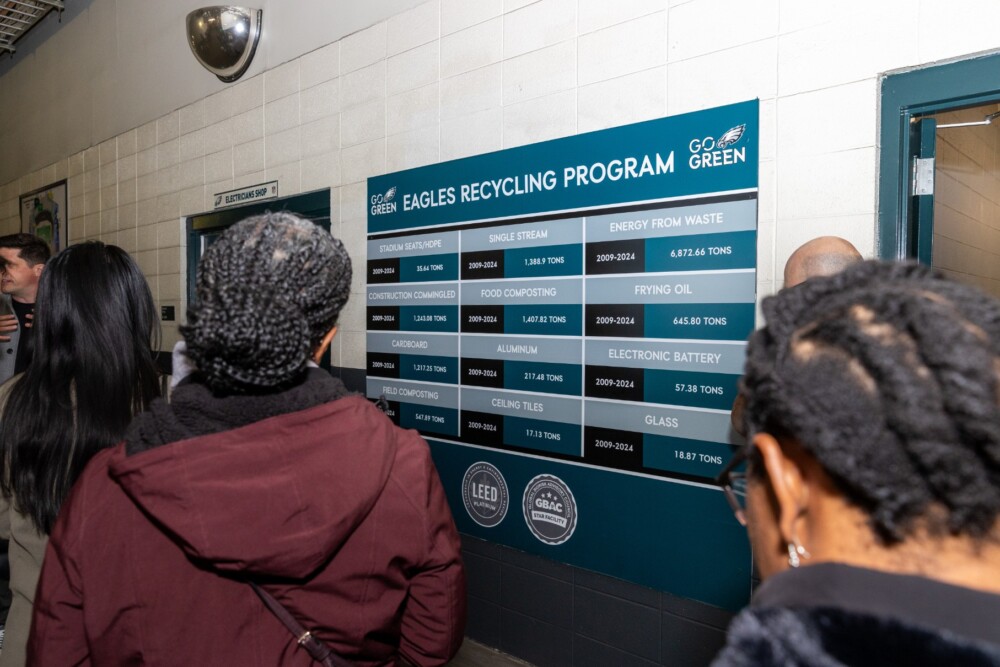
“It became harder for us to create these exclusive club spaces in an older venue, and fans often had to walk past behind-the-scenes work areas. But what we discovered was that our fans actually enjoyed being able to see what happens behind the scenes,” Norman Vossschulte.
In addition to the onsite sustainability, the Eagles also has partner projects to offset team travel and more.
The Eagles offset its team travel by partnering with the Ocean Foundation and Ocean Conservancy to help restore seagrass and mangroves in Puerto Rico’s Jobos Bay National Research Reserve.
Through the Eagles’ West Field Goal Forest initiative, 30 trees are planted for every successful field goal. In 2024 alone, the team contributed 1,140 trees planted across the country.
In 2025, the Philadelphia Eagles partnered with the National Marine Sanctuary Foundation to support a seabird tagging program in the Gulf of Maine.
Don’t miss your next opportunity to go behind the scenes. Green Philly members get exclusive access to events like this. Make sure you’re taking full advantage of your perks and staying in the loop for what’s next.
More scenes from the tour at Lincoln Financial Field:


Photos by Madasyn Andrews.
Become a Supporter!


