Philly Fixers Guild: Meet the Philadelphians building community through repair
Sick of your stuff breaking? Once a month, this volunteer-led organization helps community members repair their broken items.
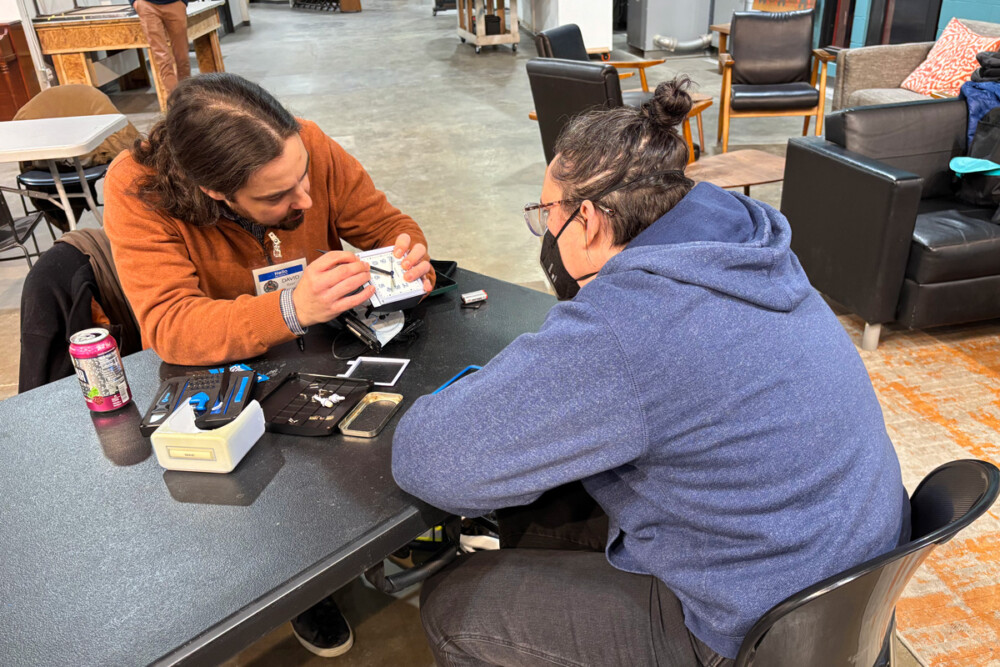
We live in a fast-paced society. When something breaks, our first impulse is often to throw it away and get a new one. But for those hoping to get a little more life out of their things, the Philly Fixers Guild sets up a pop-up Repair Fair on the second Thursday of every month at the NextFab makerspace, located at 1800 N. American St.
The Philly Fixers Guild, founded in 2014 by Ben Davis and Holly Logan, came out of an earlier neighborhood greening organization the two were both part of. Inspired by other repair organizations, such as the Dutch Repair Café, Philly Fixer’s Guild’s ethos is built on the idea of “repair rather than replace.”
“I think everyone is sort of ready to just, as soon as something stops working, just throw it out,” said Davis. “… I just want people to think, ‘hey, you know, maybe this could be repaired.’”
The vast majority of items brought to the Repair Fairs are consumer electronics such as clocks, lamps, and vacuum cleaners. But the volunteer Fixers can also help repair things like tangled jewelry, ripped clothing, or broken ceramics. Some even took TechOWL’s wheelchair repair training last November.
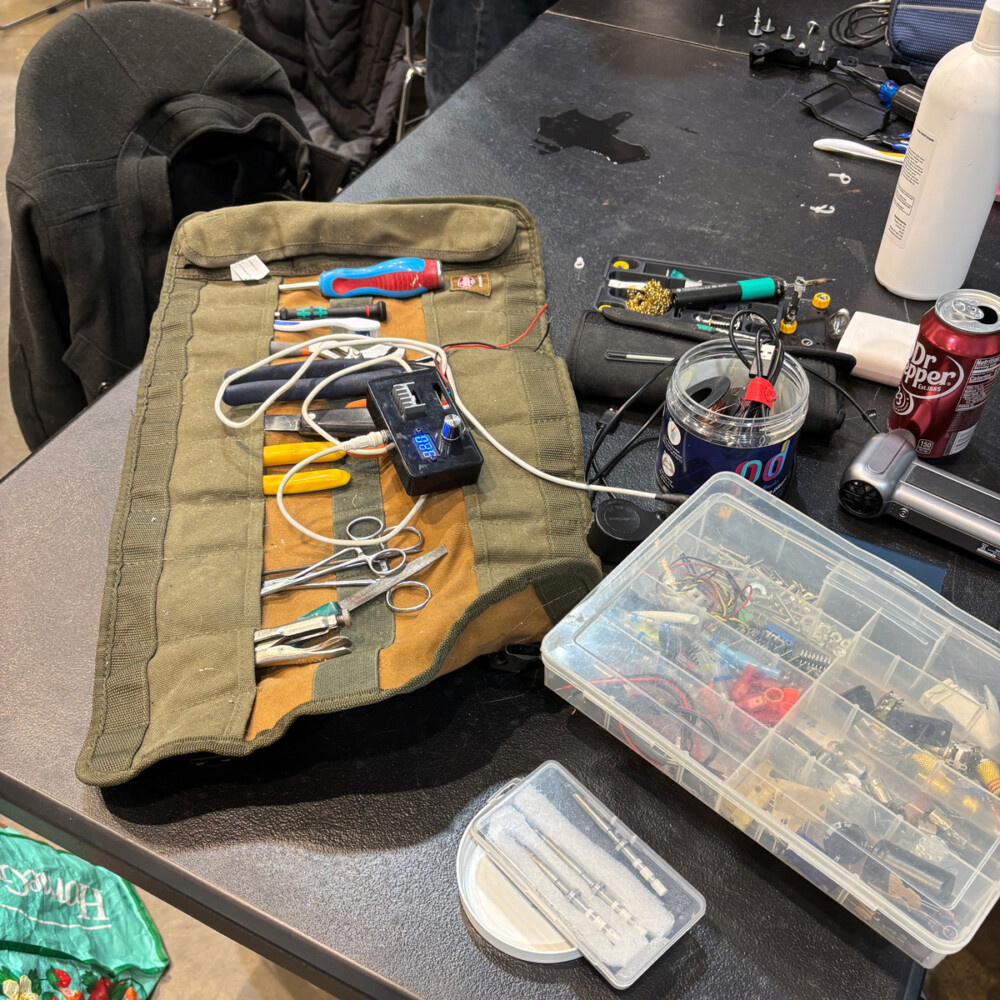
Photo: Samantha Roehl
The most recent event was Tom Orgeron’s second Repair Fair. He had realized there was a shortage of businesses that repair small appliances when his expensive blender broke, and the manufacturer wanted to charge hundreds of dollars to fix it. Instead, he turned to the Philly Fixers Guild, where they were able to get it back into working order.
This time, he brought an ice machine – the second to break in as many years.
“I don’t like the disposable culture that we have,” Orgeron said. “And honestly, if this doesn’t work, I don’t know that I’ll get another one. I’m just feeding ice makers to the trash.”
Electronics such as Orgeron’s ice maker comprise a growing sector of waste known as e-waste, which is quickly becoming the United States’ fastest-growing waste stream, according to Rice University’s Baker Institute of Public Policy.
But these items don’t have to be destined for the landfill just yet. For first-time attendee Robin Markel, repair is an important antidote to capitalism and planned obsolescence. For them, repair also provides another benefit – insurance against an uncertain future.
“I am hoping that the current phase of capitalism that we’re in is going to end and that we’re going to have less access to just getting cheap new things all the time,” said Markel. “And I think we’re going to have to know how to repair things.”
But the Repair Fair is more than just a place to fix what is broken. According to one volunteer Fixer, Taylor Noelle, it’s a great place to form new connections and build community.
“I’ve gotten to hear some really cool stories from people who have come in,” said Noelle. “I got to talk to a mom who brought her daughter in, who wanted to show her how to fix a music box. I got to talk to an elderly lesbian couple who had met, like, decades ago and just talked about their whole relationship and everything. It’s a good community.”
Repair’s Rocky Future
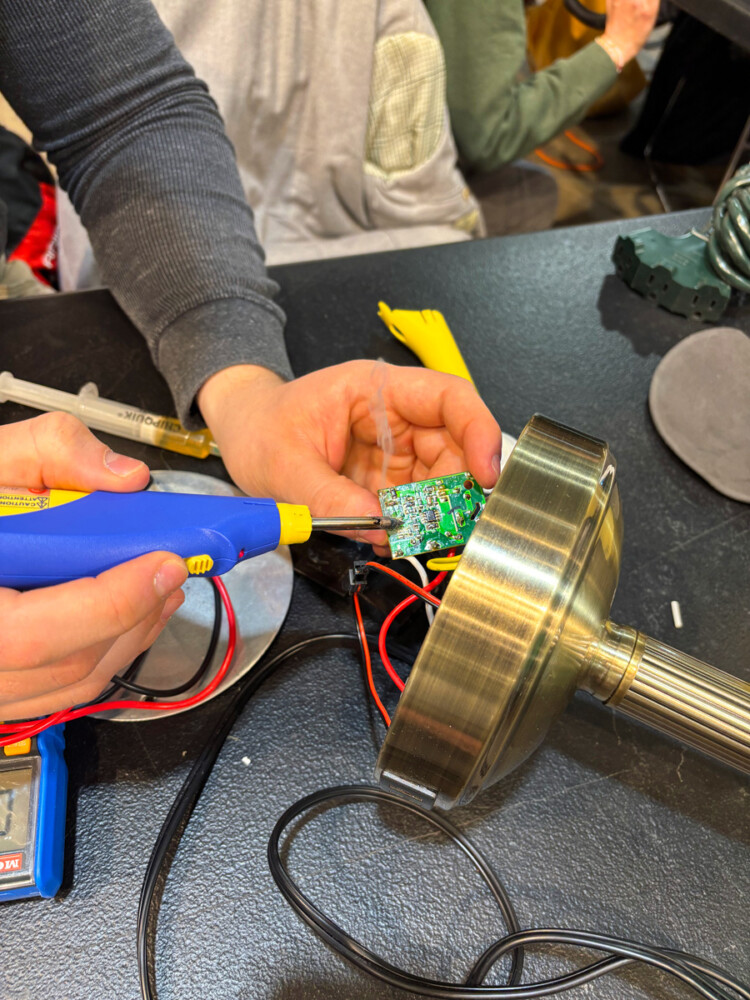
Over the years, however, the Philly Fixers Guild has noticed things are getting more difficult to repair.
“The cheaper you can manufacture something, the less repairable it is, generally. So that is one of the issues we kind of run into,” said Davis.
And they’re not the only ones who have noticed this – a lack of consumer protections has fueled a growing right-to-repair movement across the country, predicated on the belief that people should be allowed to repair and customize their own devices without artificial barriers, like planned obsolescence, put in place by manufacturers.
While a quarter of Americans now live in states that have a right-to-repair law on the books, according to the Public Interest Network, a non-partisan 501(c)(3) organization that conducts public interest research and litigation, that still leaves most of the country without protections in place.
Pennsylvania Representative Kyle Mullens sponsored House Bill 1512 in mid-2025, which would “require manufacturers of digital electronic equipment to make available to owners and independent repair providers, on fair and reasonable terms, documentation, parts and tools used to diagnose, maintain and repair digital electronic equipment.” The bill was referred to the Senate’s Consumer Protection & Professional Licensure Committee last November.
“There are a lot of structural forces that make [repair] hard,” said Noelle. “Things aren’t designed as much these days with the intention that you’re going to take it somewhere and get it repaired. It’s like you’re supposed to throw it out and move on to the next thing.”
Still, the Philly Fixers Guild estimates they’re able to fix around half of what people bring in.
What You Can Do
The Philly Fixers Guild doesn’t exist in a vacuum – it’s part of a larger movement of Repair Cafés, tool libraries, skill swaps, and time banks that are popping up all around the world.
Anyone is welcome to come to a Philly Fixers Guild Repair Fair, though they request people wait a little while between fixes to allow others to have a turn. You can also volunteer to be a Fixer on their website.
Or, if you feel so inclined, you can start your own repair organization and help your fellow Philadelphians keep items out of the landfill.
“Because we learned so much from other repair organizations, we would love to share what we learned over the years and have this movement grow,” said Philly Fixers Guild co-founder Holly Logan. “…If anyone wants to know anything about repairing, we’re happy to help.”
By the end of the night, Tom Orgeron’s ice machine was deemed unfixable. The cord was harvested for the Fixers Guild’s stash of spare parts. One of the Fixers took the compressor home to tinker with. Even though they weren’t able to get his ice machine working again, Orgeron will be back.
“I would recommend this to anybody,” said Orgeron.
The next Repair Fair will take place on March 12, 2026, from 6–8 p.m.
Cover photo: Samantha Roehl
Become a Supporter!