
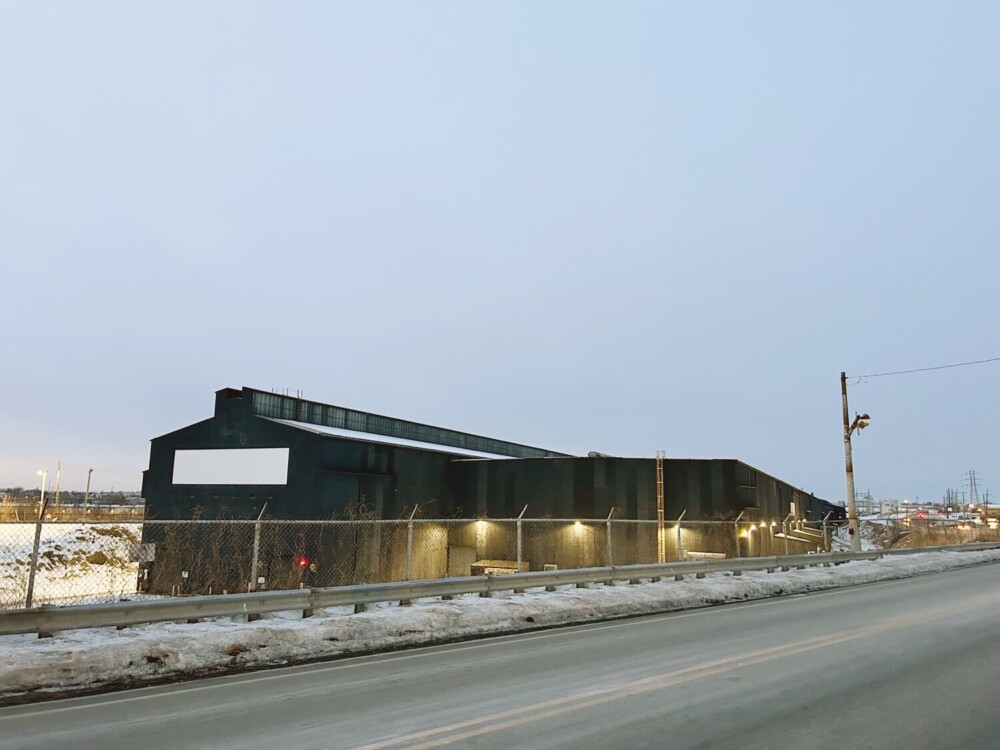
Phila. developer seeks to build data center campus in Upper Merion Township
A Philadelphia developer is proposing to build a cluster of data centers in Upper Merion Township, adding to a growing line of projects along nearby sections of the Schuylkill River.
This story was originally written by Abby Weiss and published by the Chestnut Hill Local.
Big Tech is building data centers — facilities that house information technology infrastructure — throughout the country to support the artificial intelligence boom. And the prospective sites for these centers, which consume large amounts of water and electricity, are inching closer to Northwest Philadelphia, which gets its water from the Schuylkill.
Upper Merion Township planning commissioners included four projects on their April 22 meeting agenda, all of which, if approved, would result in more than 4 million square feet of data center development in King of Prussia’s Renaissance Park. The applicants are affiliated with MLP Ventures founder Brian O’Neill, the developer who wanted to build a data center in Plymouth Township last fall before the plan was withdrawn over a legal issue.
The Upper Merion Planning Commission postponed the meeting at the request of O’Neill and it has yet to be rescheduled, a spokesperson for the commission said. Earlier this month, township supervisors granted O’Neill an extension on land development plans, which are posted on the township’s website.
Patti Erickson, a King of Prussia resident who helps run the Hughes Park KOP Civic Association Facebook page, said the projects have stirred resistance among local residents. Several hundred homes are situated less than 1,000 feet from the proposed sites, she said.
“We’re kind of mobilizing to protect not only our little neighborhood, [but] data centers impact a huge area — especially the KOP area because there’s so much going on around here,” she said.
Data centers are nothing new; there are more than 50 active facilities in Pennsylvania of various sizes, with nearly 60 additional centers proposed or under construction, according to the mapping tool Track Data Centers. DaStor, a data center solutions company, runs a 22,000-square-foot facility on 3400 Horizon Drive in King of Prussia.
But that size pales in comparison to the facilities developers are pitching for artificial intelligence. The proposed projects in Upper Merion include a 1.6 million square-foot center on 411 Swedeland Road and a 1.9 million square-foot facility nearby at 2201, 2301, 2701 and 2901 Renaissance Blvd. There’s also a pitch for 187,000 square-foot data center at 2100 Renaissance Road and another on 3200 Horizon Drive spanning 370,000 square feet.
Gov. Josh Shapiro and Sen. Dave McCormick have championed AI data center development in the state, promising tax revenue and jobs. But the size of these facilities and their potential impacts have prompted bipartisan backlash among local community members. In a recent survey by Quinnipiac University, 68% of Pennsylvania voters said they would oppose an AI data center in their community, while 20% would support it.
Residents living near large data centers have reported constant electric humming noise, increased electric bills and water scarcity. Researchers say the facilities are projected to lead to rising utility rates and the pollution can bring human health risks and rising greenhouse gas emissions.
To address concerns around electricity rates, President Donald Trump and Shapiro are demanding data centers bring their own power. Municipal officials are rewriting their zoning ordinances to more strictly regulate these facilities.
But in towns like Upper Merion, developers are submitting proposals before these ordinances are adopted. Upper Merion Township’s new data center ordinance includes restrictions on size, noise and water usage methods, and requires the facilities to be more than 1,000 feet away from residential areas.
But those requirements won’t apply to O’Neill’s project proposals, because they were submitted before the ordinance was enacted. At the Pennsylvania Association of Township Supervisors’ annual conference last week, Upper Merion Supervisor Tina Garzillo encouraged local leaders to prioritize writing new regulations before these projects reach their towns, the Pennsylvania Capital Star reported.
The township drafted the new data center ordinance because “this was an important issue to resolve, especially with regards to residential buffers, environmental concerns, size requirements, utility usages, noise reduction, architectural standards, etc.,” Garzillo told the Local in an email. She declined to comment on O’Neill’s projects, as they haven’t come before the supervisors to review.
It’s unclear what O’Neill’s specific plans are for power generation, noise mitigation and water usage to cool the facilities.
The developer and his affiliates, including Richard Heany, are looking to build the facilities at The Discovery Labs, a 5 million square-foot tech, healthcare and life sciences office campus. The complex is managed by O’Neill and is located on Renaissance Park, a 300-acre business park.
Diann Poole, who lives by Renaissance Park at Copper Mill Station, said the neighborhood is relatively quiet and the park contains pathways for walkers and bikers. But she’s worried that the data centers will lower the value of her house.
“No one wants to live near anything that’s going to impact their serenity, that’s going to affect their ability to relax. I like to sit out on my deck. And if all I hear is this loud hum and there’s particles flying all over the place, that’s not going to be very enjoyable,” she said.
Erickson said she’s concerned about the safety of building the Renaissance Boulevard facilities on a former superfund site, which contains four inactive quarries. Companies disposed of hazardous waste there starting in 1919, polluting the soil and groundwater.
“We understand that development comes, but it shouldn’t impact their neighbor in an extremely negative way. It’s not worth it,” Erickson said. “Everybody’s saying that AI is the future. If they can do all this, they can find a way to make it safer and to put it in a more logical place, not in the middle of a residential area.”
The site has been remediated with three of the four quarries having caps to prevent pollution from flowing into the groundwater, the U.S. Environmental Agency Protection Agency has reported. The latest EPA five-year review in 2021 says the site is “protective of human health and the environment.”
An EPA spokesperson said in an email that the site is safe for development with restrictions in place to keep it protected. There are specific requirements for anything that goes through the caps, such as foundations and footing. The EPA reviews the project before construction and officials may conduct periodic inspections as well. The next EPA five-year review will be published around July 31, the spokesperson said.
Developers have proposed hyperscale data centers in other parts of Southeastern Pennsylvania that contain land, electrical infrastructure and water from the Schuylkill River. The state offers a tax break to incentivize data center development. There are currently applications in Linfield, Limerick, East Vincent and East Whiteland. State Sen. Katie Muth, a Democrat who represents these townships, joined advocacy groups in Harrisburg this week to call for a statewide moratorium on data center development in Pennsylvania.
Plymouth Township resident Patti Smith said members of grassroot movements in these towns and across the country are banning together to exchange resources and information, as well as fundraise for legal representation.
“The hardest thing for us to do is get pro bono representation but also fundraise and identify expert witnesses for these hearings. That burden is on us,” she said.
Erickson said she’s been receiving support and inquiries from residents outside of Upper Merion as well.
“I think King of Prussia hits close to home for a lot of people. They do a lot of entertaining here,” she said, referring to the King of Prussia mall and other venues. “A lot of people wonder what’s going on here because they know they’re going to be there. People are going to ask, ‘How is that data center in King of Prussia going to affect me?’”
Become a Supporter!


