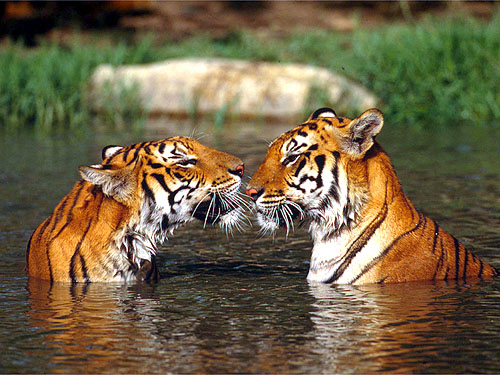
There’s less than 3500 tigers in the wild – making them one of the most critically endangered animals. One of the main problems is the black market for tiger skin and parts – for Chinese medicine or hunted as trophies on top of forest destruction. This billion-dollar underground industry caused tiger numbers to rapidly drop from 100,000 over the past century. Treehugger posted about Current TV’s Vanguard series, with a host going to Myanmar’s open tiger store selling tiger skin and being offered tiger as lunch.
These beautiful creatures do have a hope. WWF has initiated a goal to double the tiger population by 2022. Conservation officials in India have said there’s been a 20% increase of tigers since 2006 as a result of improved protection efforts & reduced poaching campaigns.
How can you help?
Posted by Julie
*Stay tuned to GPB this week for Shark Week updates & more about animal conservation efforts
Catch up on the latest sustainability news: New Washington Avenue Connector completed. The City of…
From a solar-powered shed in East Parkside to an orchard on State Road, these SustainPHL…
Catch up on the latest sustainability news: Parks and Rec expands environmental stewardship program. Philadelphia…
(and they're all SustainPHL nominees!) From storm drains in Germantown to community gardens in Kensington,…
Catch up on the latest sustainability news: Teens turn vacant lot into green space. Since…
Inside a Francisville Passive House project, Green Philly attendees saw how airtight construction, insulation, efficient…